
"Half Century"
3000 article(s) found

The Brand characteristics of Coffee species and Tree species in Ethiopia introduction to the taste treatment method in manor producing areas
Although Ethiopian coffee beans say that ET is the hometown of coffee, the earliest commercial record of coffee cultivation is in Yemen, Yemen. A. D. 575. HoHo~ calculated in this way, the history of the discovery of ET should also be in the 6th century AD. We have to go back to our lucky Mr. Cuddy again. In other words, after the magical Cuddy discovered the miraculous coffee, he brought it to the same.

The treatment of coffee beans the traditional processing techniques of Yunnan coffee
Yufa, which opened in the 1960s and has a history of more than 50 years, stepped into the store as if it had stepped into a time tunnel. The machines displayed in the shop have been used for more than half a century, and the old appliances have found their old flavor. Fang found that the old appliance is not only a kind of nostalgia, but also the accumulation of traditional wisdom of the older generation. Since the spread of self-made coffee from a Hainan chef, the boss of the main coffee supplier to the old villagers in the town has insisted

General knowledge of fine coffee the traditional processing techniques of Yunnan coffee
Yufa, which opened in the 1960s and has a history of more than 50 years, stepped into the store as if it had stepped into a time tunnel. The machines displayed in the shop have been used for more than half a century, and the old appliances have found their old flavor. Fang found that the old appliance is not only a kind of nostalgia, but also the accumulation of traditional wisdom of the older generation. Since the spread of self-made coffee from a Hainan chef, the boss of the main coffee supplier to the old villagers in the town has insisted

Common sense of Coffee beans traditional processing techniques of Coffee in Yunnan
Yufa, which opened in the 1960s and has a history of more than 50 years, stepped into the store as if it had stepped into a time tunnel. The machines displayed in the shop have been used for more than half a century, and the old appliances have found their old flavor. Fang found that the old appliance is not only a kind of nostalgia, but also the accumulation of traditional wisdom of the older generation. Since the spread of self-made coffee from a Hainan chef, the boss of the main coffee supplier to the old villagers in the town has insisted
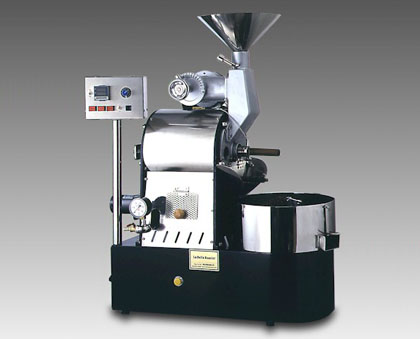
The evolution history of coffee roaster
As early as the 13th century, the Arabs invented to put coffee beans in a pot, stir-fry them with fire, grind them into powder, and then brew coffee. The early Arabs liked to bake the beans shallowly and boil them with spices such as cardamom. Later, this coffee stir-frying method spread to Syria, Turkey and Egypt, where it was used to stir-fry the coffee black, then grind it into powder and add it.

[raw bean file] introduction to Huang Bourbon, Queen's Manor of Brazil
[manor introduction]: this coffee comes from FazendaRainha (Queen's Manor), which covers an area of 280mu and is located in Vale da Grama, an ancient volcanic valley in Brazil. In 2011, the manor won the championship in the COE competition in Brazil. Fazenda Rainha is owned by the prestigious and respected coffee family Carvalho Dias family.

Chinese coffee culture
The history of the introduction of coffee into China is not long, and it was not until 1884 that coffee was first planted in Taiwan Province. In the mainland of the motherland, the earliest coffee cultivation began in Yunnan. At the beginning of the 20th century, French missionaries brought the first batch of coffee saplings to Binchuan County, Yunnan Province, and began to grow coffee in the mainland. In terms of natural conditions, many parts of our country and
About the history of coffee roasters
The history of coffee roasters as early as the 13th century, the Arabs invented to put coffee beans in a pot, heat and stir-fry them, then grind them into powder, and then brew coffee. The early Arabs liked to bake the beans shallowly and boil them with spices such as cardamom. Later, this method of stir-frying coffee spread to Syria, Turkey and Egypt, where it was used to stir-fry coffee black.

What is the semi-washing method? What is the relationship between semi-washing treatment and half-sun treatment.
In the previous article, we introduced water washing treatment and sun treatment, but what are half-sun treatment and half-washing treatment? What is the relationship between them? What is the effect on the flavor of coffee? In fact, half-sun treatment and semi-washing treatment actually mean the same treatment, because their treatment methods happen to have the process of sun treatment and water washing treatment.
Introduction of gene mutations in coffee beans
From left to right: Kenya round beans, elephant beans, Kenya AA pointed bourbon (Bourbon Pointu): found in Bourbon Island in 1810, beans changed from round to pointed, with only half the caffeine content, but in small quantities, weak and extremely precious (mostly cultivated in the laboratory). Elephant bean (Maragogype, or Elephant Bean): the most famous variety of Tibica beans, first found in northeastern Brazil in 1870.
Coffee species gene mutant
From left to right: Kenya round beans, elephant beans, Kenya AA pointed bourbon (Bourbon Pointu): found in Bourbon Island in 1810, beans changed from round to pointed, with only half the caffeine content, but in small quantities, weak and extremely precious (mostly cultivated in the laboratory). Elephant bean (Maragogype, or Elephant Bean): the most famous variety of Tibica beans, first found in northeastern Brazil in 1870.
Tea Culture in the Coffee Kingdom
The United States is called the coffee kingdom, but it is amazing that about half of the people drink tea. In the American market, there are hundreds of kinds of oolong tea and green tea in China, but most of them are canned cold drink tea. This also highlights that Americans drink tea, pay attention to efficiency and convenience, do not want to waste time and action to brew tea and pour tea dregs, and they do not seem to want to show any traces of tea in the teacup.

A brief introduction to the characteristics of Bogut Panamanian Coffee Manor-Panamanian Alida Manor Coffee
Professional coffee knowledge exchange more coffee bean information please follow the coffee workshop (official account cafe_style) front street-Panama Elida Estate Coffee Manor introduction Robert Lamastus founded Elida Estate in the early 20th century, when he was working for the Panama Canal, he heard that Boquete was particularly suitable for growing coffee, so he paid for it.
The history of coffee roasters
As early as the 13th century, the Arabs invented to put coffee beans in a pot, stir-fry them with fire, grind them into powder, and then brew coffee. The early Arabs liked to bake the beans shallowly and boil them with spices such as cardamom. Later, this coffee stir-frying method spread to Syria, Turkey and Egypt, where it was used to stir-fry the coffee black, then grind it into powder and add it.
On Coffee species Gene Mutants
Pointed Bourbon (Bourbon Pointu): found in Bourbon Island in 1810, beans changed from round to pointed, with only half the caffeine content, but in small amounts, weak and extremely precious (mostly cultivated in the laboratory). Elephant bean (Maragogype, or Elephant Bean): the most famous variety of Tibica beans, first discovered in 1870 in the Maragogype bean-producing region of the state of Bahia in northeastern Brazil.
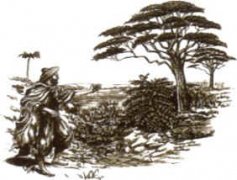
World Coffee-1
In 622, Muhammad, the prophet of Islam, led the believers to migrate from Mecca to Medina and began to establish a church state, which developed into a powerful empire spanning Central Asia to the Liberian Peninsula in a century. Ethiopia, the origin of coffee, was included in the Ilan Empire and remained independent as a Christian country. Coffee began to flow from Ethiopia to Afghanistan in the early 11th century.

Chinese coffee culture
The history of the introduction of coffee into China is not long, and it was not until 1884 that coffee was first planted in Taiwan Province. In the mainland of the motherland, the earliest coffee cultivation began in Yunnan. At the beginning of the 20th century, French missionaries brought the first batch of coffee saplings to Binchuan County, Yunnan Province, and began to grow coffee in the mainland. In terms of natural conditions, many parts of our country and

The types of coffee beans all over the world introduce the treatment of taste and flavor.
The world's largest producer of high-quality coffee, traditional deep-roasted coffee has a strong and memorable taste. Colombian coffee is one of the few original coffee sold in the world under the name of the country, which is the world's largest exporter of Arabica coffee beans. Rich in nutrients, some with nutty flavor. It is often described as having a silky taste. Of all the coffee
Introduction of gene mutants of boutique coffee
From left to right: Kenya round beans, elephant beans, Kenya AA pointed bourbon (Bourbon Pointu): found in Bourbon Island in 1810, beans changed from round to pointed, with only half the caffeine content, but in small quantities, weak and extremely precious (mostly cultivated in the laboratory). Elephant bean (Maragogype, or Elephant Bean): the most famous variety of Tibica beans, first found in northeastern Brazil in 1870.